When we think of hospitality, we often picture fancy chocolates on pillows or some pineapple-themed door knocker that screams, “Someone inside here owns a monogrammed robe.” But the apple…humble, hardy, and surprisingly glamorous when polished…has been quietly doing the welcome work for centuries. A bowl of apples on a hotel check-in desk, a warm pie cooling on a neighbor’s windowsill, an orchard that invites the community to wander in and pick a few apples have long played host in their own unassuming way.
And like any good host, the apple has a story.
From the Mountains of Kazakhstan to Your Kitchen Table
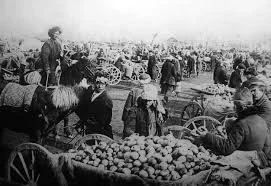
The apple’s journey begins in the wild forests of Central Asia, where the ancestral species still grows today. From these ancient groves, near modern-day Almaty, often translated as “Father of the Apples”… wild creatures and ambitious traders carried apples westward. The fruit made its way to the Middle East and eventually caught the eye of the Romans, who perfected grafting and cultivation. Thanks to Roman engineering and the Silk Road, apples journeyed even farther, planting themselves firmly into European and Asian cuisines.
The World’s Last Wild Apple Forests
By the Middle Ages, apple orchards thrived across continents, cherished for their versatility, storied sweetness, and reliability as a crop.
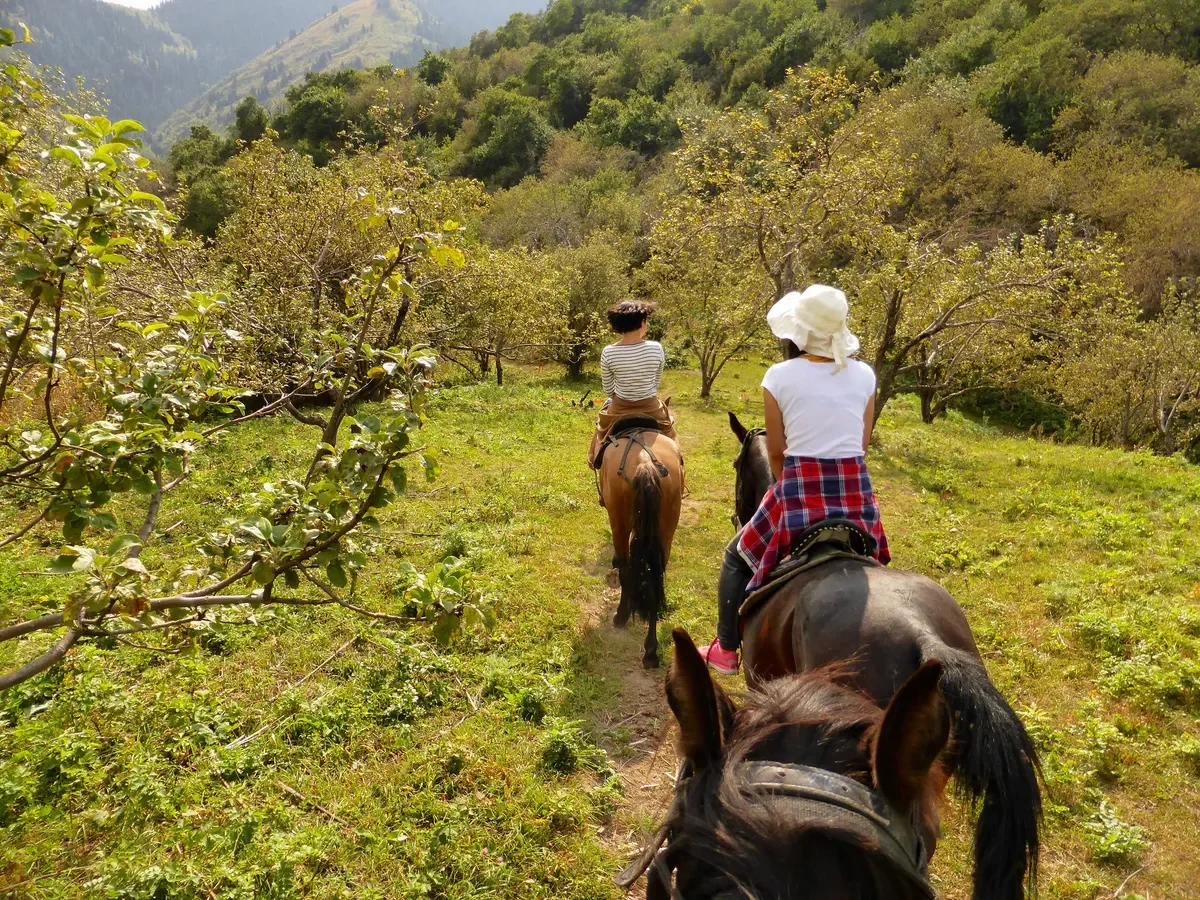
Today, remnants of those ancient wild apple forests are protected in reserves and national parks.
Hiking through these forests offers a rare, almost surreal experience: apples of wildly different sizes, colors, and flavors growing side by side, some sweet, some sharp, some barely recognizable as apples at all. It’s not a polished tourist attraction so much as a living archive—part wilderness, part genetic time capsule.

Visit The Place Where Apples Began
Almaty is a compelling destination for travelers drawn to both nature and origin stories. Set against the snow-capped Tian Shan mountains, the city serves as the gateway to protected areas where remnants of the world’s last wild apple forests still grow. Just outside the city, guided excursions lead visitors into foothill landscapes where Malus sieversii—the wild ancestor of every modern apple—continues to thrive.
As highlighted by Atlas Obscura, these forests are one of the most extraordinary (and fragile) food-origin sites on the planet, making Almaty a pilgrimage spot for food lovers, botanists, and travelers who like their history rooted firmly in the soil.
Coming to America: Apples Take Root in a New World
Sweet apples are not native to North America, only crabapples are. Sooo when European colonists arrived, they brought seeds and young saplings. Within decades, orchards dotted the colonies, helped along by settlers, Indigenous trade routes, and a rapidly expanding cider culture.
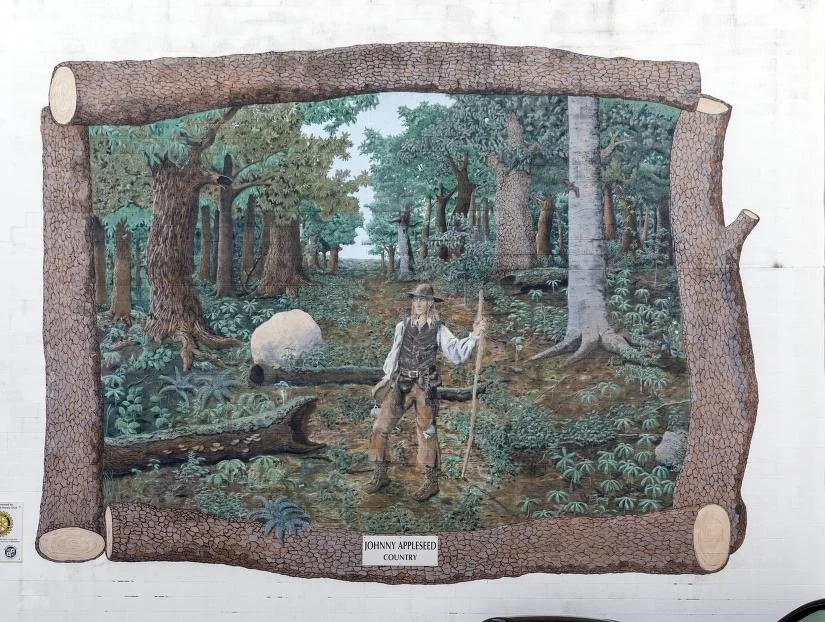
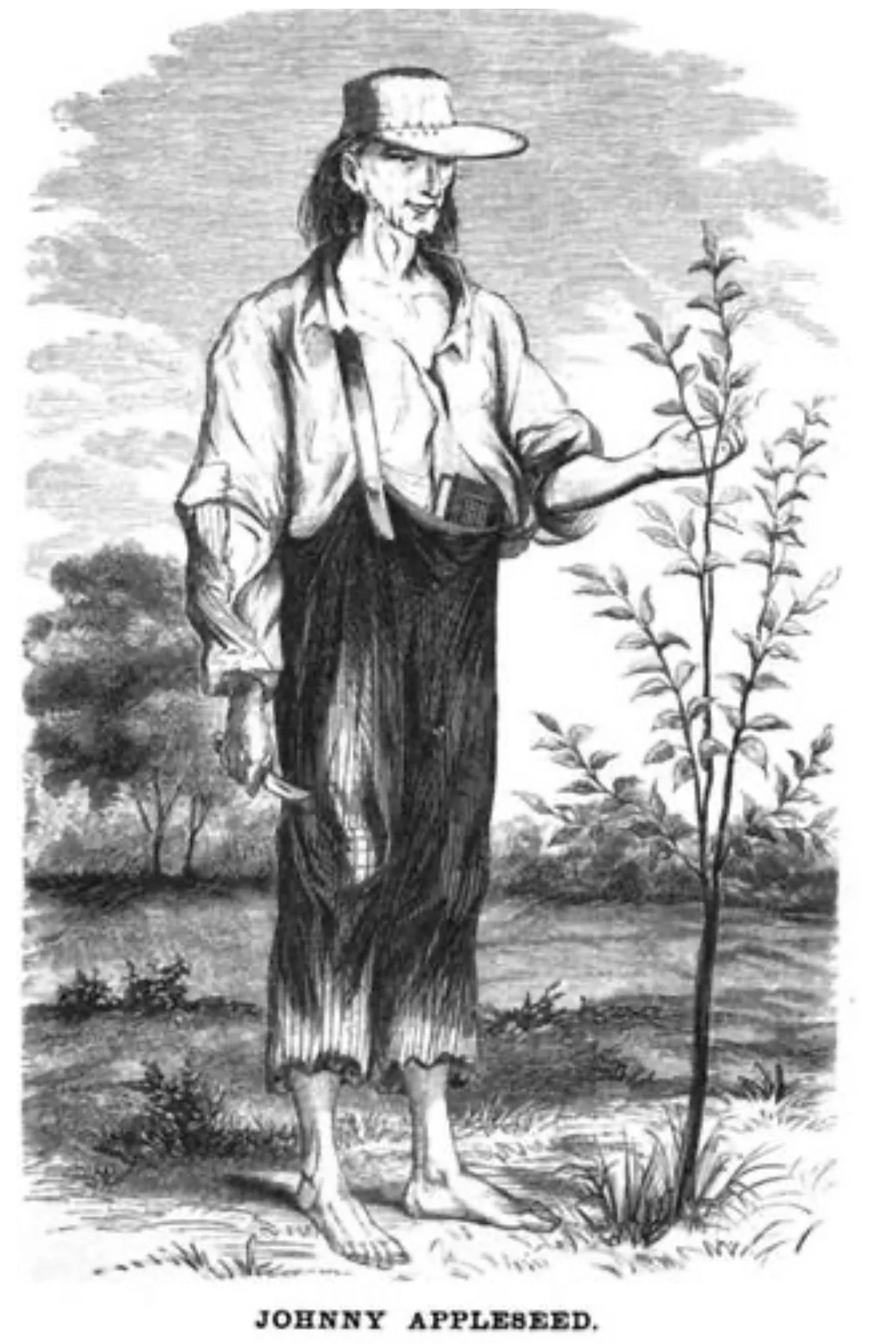
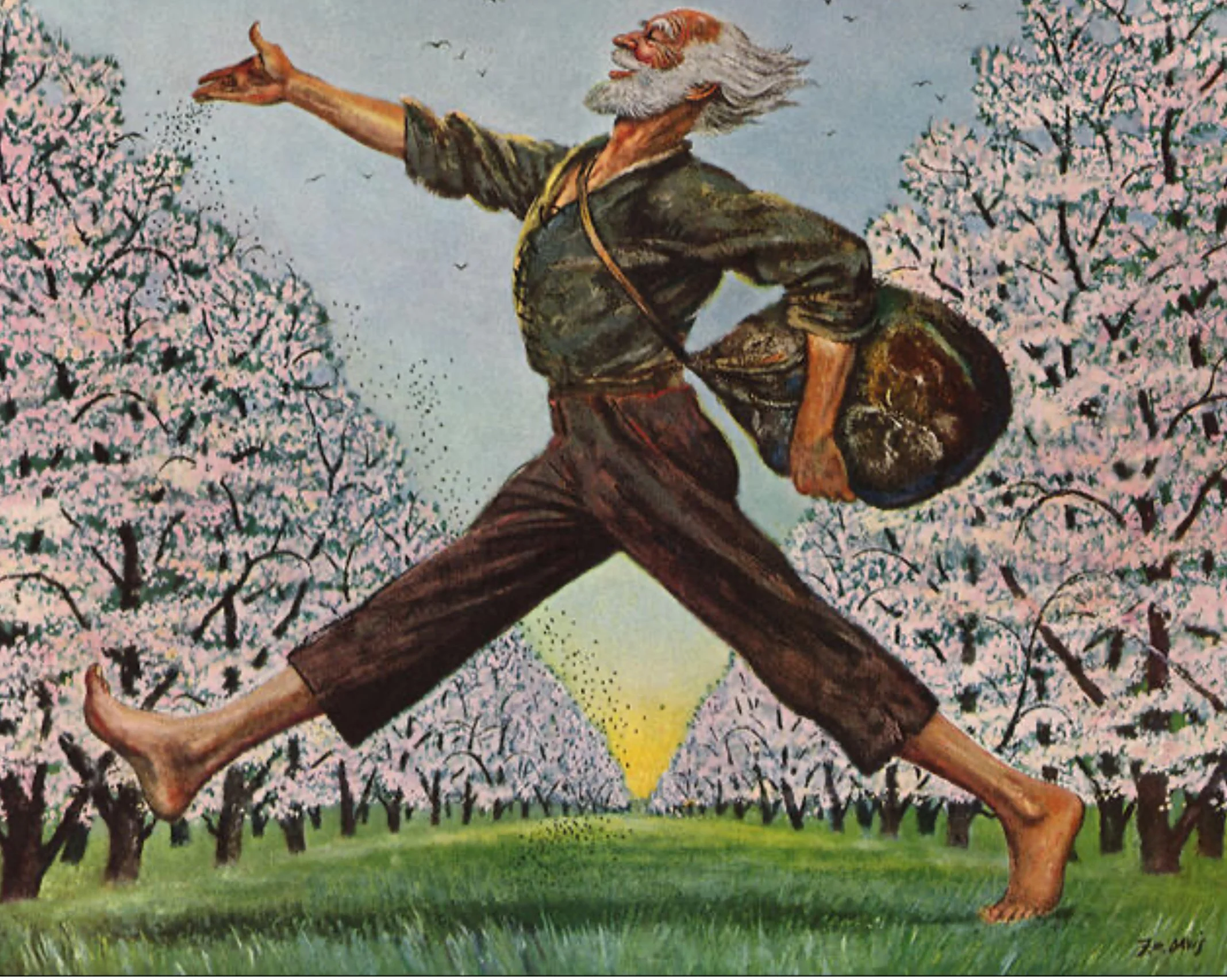
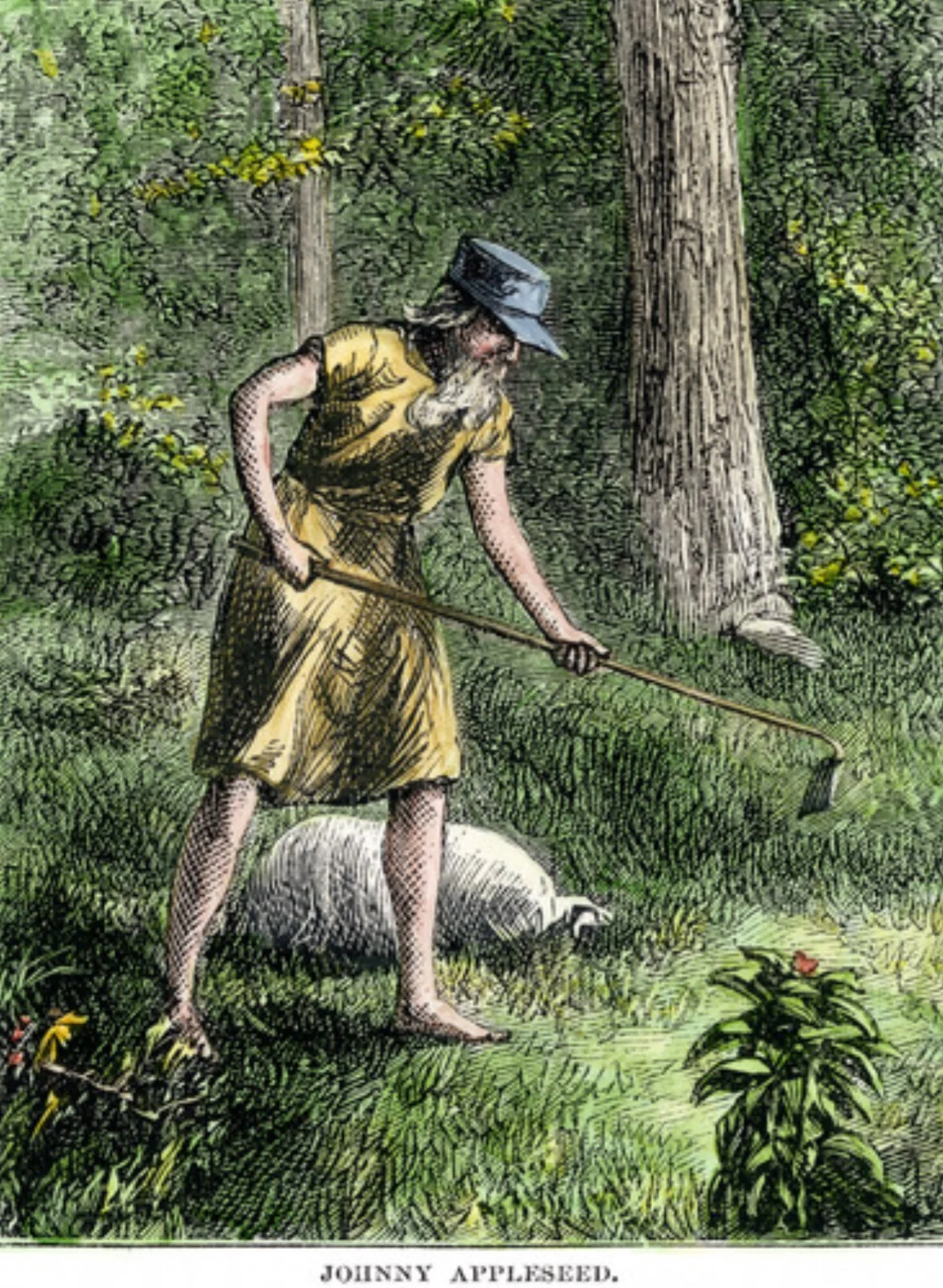
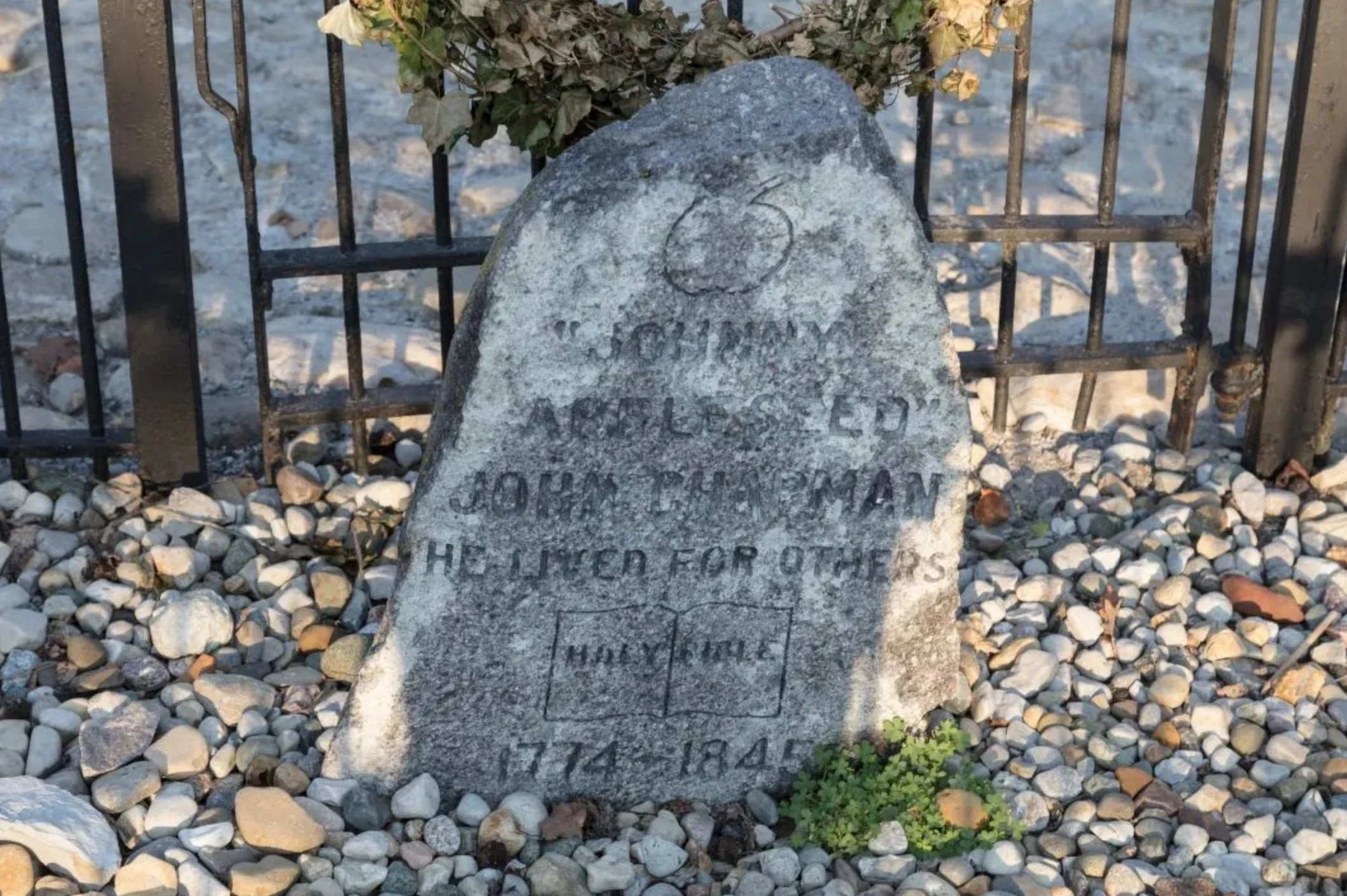
Enter Johnny Appleseed, born John Chapman, who roamed the frontier with a sack of seeds and a philosophy. Chapman preferred seed-grown trees that produced small, tart apples perfect for hard cider, a drink safer than most frontier water sources, and more common than tea or coffee. With each nursery he planted, Chapman wasn’t just establishing orchards; he was embedding hospitality into the fabric of a new country: nourishment, comfort, trade, and community.
His story still resonates because apples became one of America’s earliest engines of local commerce and connection.



A Global Harvest, A Local Welcome
Today, apples are a global powerhouse…an agricultural, economic, and cultural heavy hitter. Nearly 96 million metric tons of apples are harvested worldwide each year, with China producing more than half of the total and the U.S. ranking a strong third.
Here at home, apples are the most consumed fruit in the country. American growers harvest more than 11 billion pounds of apples annually, generating roughly $3.2 billion in direct revenue for farmers. But that’s just the beginning of their economic ripple effect. By the time those apples travel through packers, , wholesalers, grocers, hotels, restaurants, cider mills, and school cafeterias, they fuel an estimated $23 billion in total economic impact across the U.S. workforce.
And because hospitality is not just domestic, one in every four U.S. apples is exported. Top buyers include Mexico, Canada, and India, making apples a surprisingly sophisticated player in global trade.
That’s a lot of economic muscle for a fruit we often grab without thinking, toss into a tote bag, or hand to a child on the way to school.
From Manhattan to 43,000 Trees: The Once Munsee Orchard Story
And then there’s the kind of hospitality that grows from the ground up—literally.
Imagine leaving a Manhattan apartment full of blueprints, scripts, and deadlines to revive land that had been untouched for half a century. That’s what Jinny St. Goar and her partner did when they moved to the Hudson Valley with a vision of creating a farm that could feed them and nourish their community.
It took over five years clear brush, restore soil, and establish Once Munsee Orchard, now home to more than forty-three thousand apple trees planted in modern high-density rows on about 40 acres – that’s more than 1000 trees per acre.. These slim, elegant trellised trees may not look like the sprawling orchards of childhood storybooks, but they are marvels of efficiency: more trees per acre, earlier fruiting, and a more sustainable way to bring apples to market.
Today, Once Munsee grows seven varieties—from Pink Lady to Aztec Fuji to Gala Wildfire and more…ripening from late summer through early fall. Jinny sells her apples wholesale but also visits local school cafeterias to convert lunch into an apple tasting event. Few farmers get to witness firsthand the joy (or theatrical skepticism) of a child discovering a new favorite apple.
Hospitality at its core: grown, shared, and passed on.
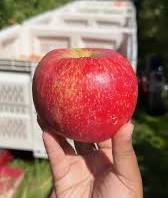
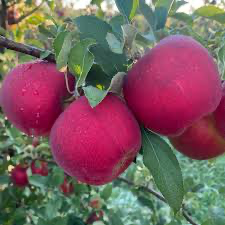
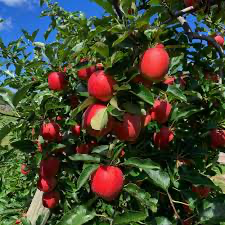
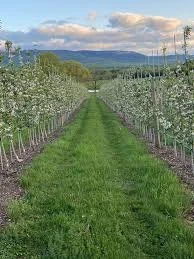
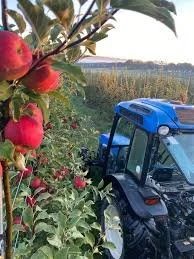
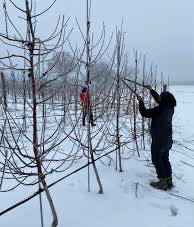
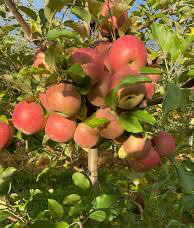
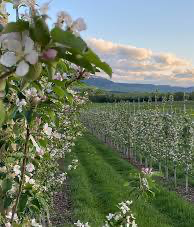
Once Munsee Orchards can be found in the beautiful town of Wallkill, New York, with stunning views of the Catskills and the mighty Hudson River close by.
We chatted with Jinny St. Goar, who, with her partner Joe Donovan, founded Once Munsee Orchard in Ulster County, New York. Among many of her accomplishments, Ms. St. Goar enjoyed over 25 years as a business journalist for such publications as Institutional Investor, the Economist Intelligence Unit, Plan Sponsor, Forbes, and others. When she is not plotting her plantings, she supports and serves on the Boards of the Howland Chamber Music Circle and The Joy 2 Learn Foundation.
What inspired the leap from city life to farming?
We wanted a life rooted in the land. After decades in the city, the idea of growing food and nourishing people was appealing.
Why apples?
New York is the second-largest apple-producing state in the nation, and the Hudson Valley is a leading apple-growing regions in the state. We’ve benefitted enormously from the wisdom and expertise of fellow apple-growers, most of whom have been growing apples for generations. What is more, Cornell University is one of the country’s foremost research institutions in agriculture in general, and in apples, in specific.
How did you revive land that hadn’t been touched for fifty years?
Clearing years of brush and restoring the soil took time, but the property’s gentle slopes help protect blossoms from spring frosts—making it an ideal orchard site.
What advantages do high-density plantings offer?
Apple-growers started to experiment with high-density orchards in the 1920’s but the approach did not catch on commercially until the 1990’s. These plantings have a myriad of benefits: greater efficiency for the tending by both machines and people, and speed of productivity, among them. Some growers harvest their trees the year after planting; we’ve waited two years to harvest ours. Because of that, 2025 was our first harvest of all 43,000 trees.
How do you choose your varieties?
We consider harvest timing, and market demand. Our lineup includes 2 strains of Galas, HoneyCrisp, Crimson Crisp, Pink Lady, EverCrisp and Aztec Fuji.
How do you share your apples beyond wholesale?
We partner with schools for tasting sessions. Introducing children to different flavors is one of the most rewarding parts of what we do.
What is next for Once Munsee?
We hope to expand our educational programs and increase sales more directly to consumers.
…And, of course, keep growing delicious apples.


Legends, Myths, and Wonderfully Odd Apple Lore
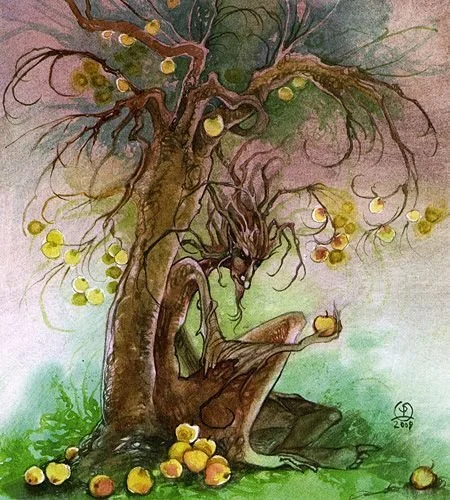
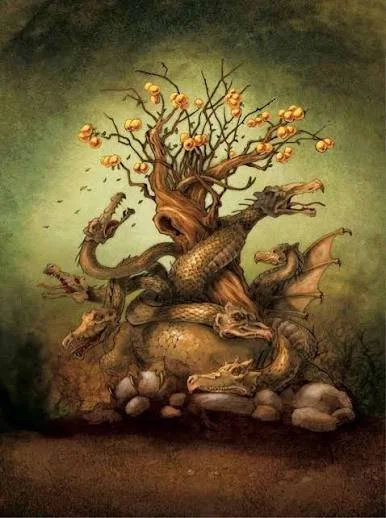
Apples have rolled through mythology and folklore with the kind of flair most fruits can only dream of.
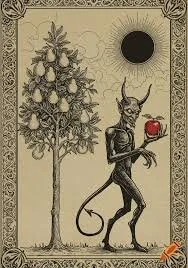
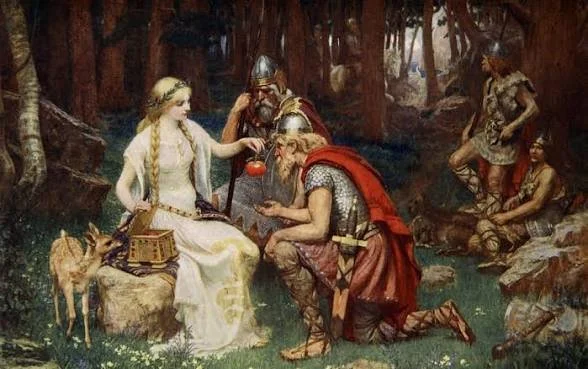
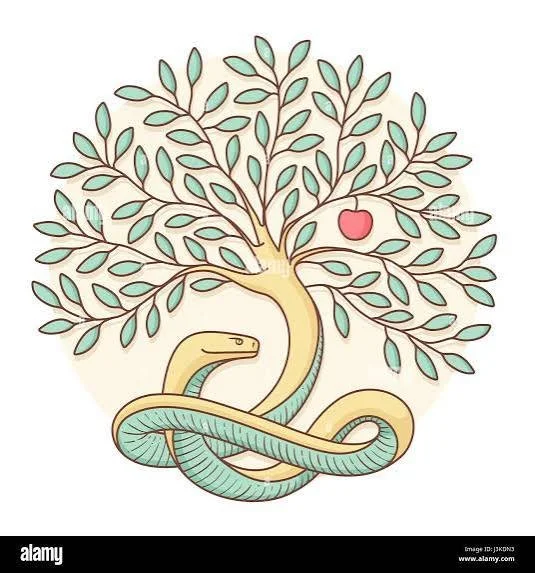
The famous “forbidden fruit”? The Bible never names it—but a Latin pun linking “apple” and “evil” made the association stick in Western imagination. Greek mythology gave us the golden apple that sparked the Trojan War. Norse mythology credited apples with keeping gods eternally youthful. Snow White learned the hard way that not all apples are offered with good intentions. And during Prohibition, activists urged Americans to chop down their apple trees because they were too closely associated with hard cider. (Spoiler: not everyone listened.)
And yes, apples float because roughly a quarter of their volume is air. Science may not always feel magical, but bobbing for apples suggests otherwise.
A Symbol of Welcome
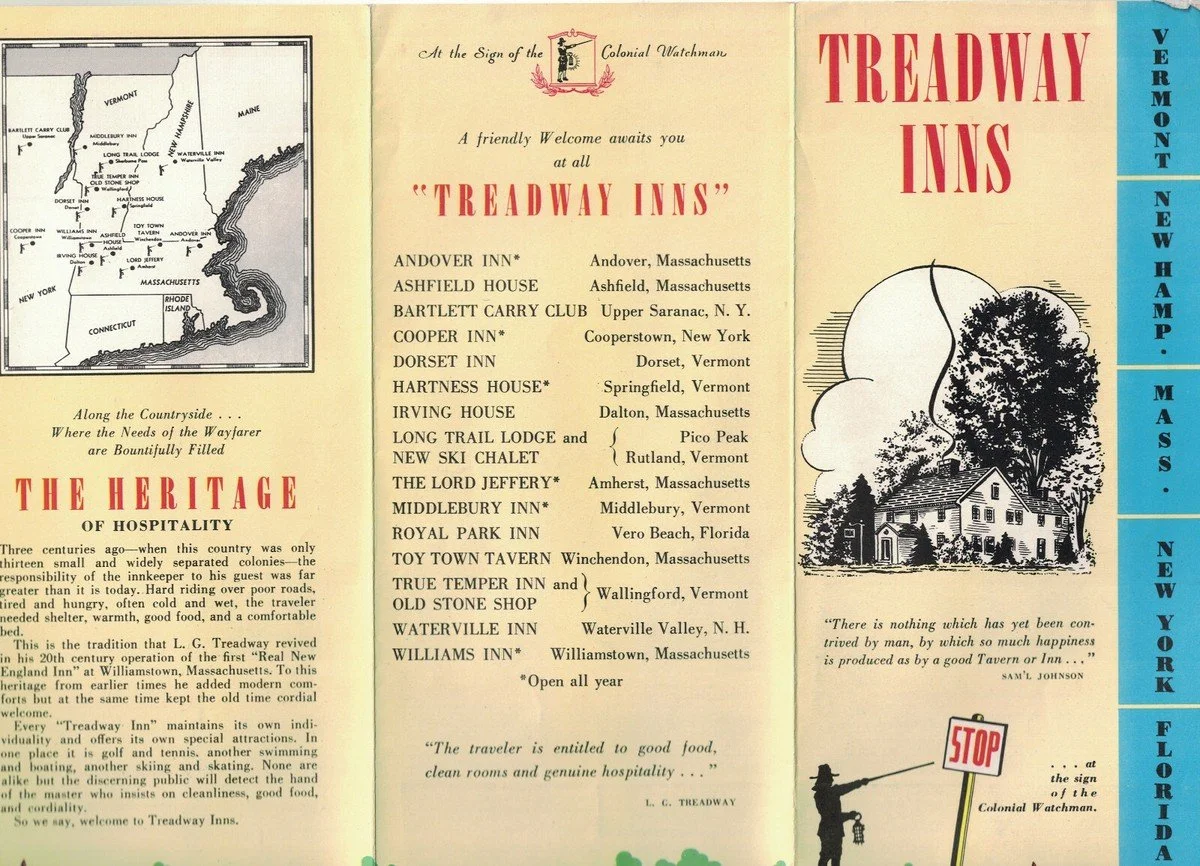
The now-defunct Treadway Inns (later branded as Treadway Resorts or Treadway Hotels) were a mid-20th-century hotel chain known for warm, personalized hospitality as well as a signature custom. In fact, my Dad ran four of their hotels in the late 1970’s and it was the memories of inviting lobbies with fireplaces and apples…always apples.
Treadway Inns were known for placing fresh apples at the front desk.
Mid-century travelers often recalled the polished apple waiting for them at check-in at Treadway Inns across New York, Pennsylvania, and New England. Long before lobby cookies and infused waters became standard, Treadway staff set out fresh apples — often local, always polished — as a symbol of warmth and care. It wasn’t luxury; it was hospitality in its simplest, most human form.
What the record shows:
Regional newspapers from the 1950s–1970s referenced “the Treadway touch,” which included a polished apple at check-in.
The tradition appears to have originated at properties in New England and upstate New York, where apples were local, seasonal, and inexpensive… but symbolically warm and homey.
A few travel writers of the era joked that “you could always count on a clean room and a shiny red apple at a Treadway.”
Hotel brochures (especially those from Treadway Inn of Wilkes-Barre, Cherry Hill, and Lebanon, NH) advertised a “home-style welcome featuring fresh local apples.”
Many former employees, in oral history interviews from local historical societies, recalled the apple ritual as part of staff culture: “At Treadway, you greeted the guest like you’d greet someone at your kitchen door, with something from the table. For us, that meant apples.”
Why apples?
A few likely reasons:
Regional identity: Treadway Inns were mostly in apple-growing states (NY, PA, NH).
Cost-effective yet meaningful: An apple is inexpensive but symbolizes care, abundance, and renewal.
Brand consistency: Treadway couldn’t trademark the pineapple, but they could adopt the apple as their own symbol of welcome.
Marketing language used the phrase “the Treadway Apple Welcome” - not widely publicized at a national scale, but enough to appear in local ads and travel guides
The Apple as Host
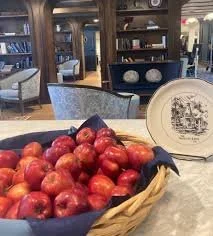
Apples have always had a way of making places feel warm and people feel welcome. Hotels know this. The Nittany Lion Inn famously returned a basket of apples to its front door after locals insisted the tradition remain. In Utah, apples greet arrivals at high-altitude resorts as both a refreshment and a remedy. Several California hotels include crisp apples among their lobby treats, reminding guests that hospitality doesn’t need to be elaborate to be effective.
A Fruit with Heart—and an Economic Footprint
Few fruits merge history, commerce, culture, and hospitality as gracefully as the apple. Whether it’s contributing billions to the U.S. economy, supporting global trade routes, or simply greeting a weary traveler in a hotel lobby, the apple has earned its place as both a business asset and a symbol of welcome.
The next time you grab a crisp apple or settle into a hotel room greeted by one, remember: you’re holding centuries of history, myth, travel, industry, and human connection. Not bad for a fruit that floats