All In: My Father’s Gamble on the Cherry Hill Inn
Welcome Back!! Thank you for visiting again. If this is your first visit to Hospitality Inherited, Hello!
Today’s post focuses on Frank A Rota’s (Dad) second resume entry - The Cherry Hill Inn. We’ll touch upon the decision to leave the New York Hilton had to be a difficult one—though I suspect my father’s pride, ambition, and perhaps a bit of anger helped make it easier to accept a position outside of New York City. I was four when he sold our house in Verona for a deluxe apartment in the skies (of Cherry Hill, NJ). This time in my Dad’s work and home life was tumultuous, but he never lost sight of his career goals, and he was betting that the Cherry Hill Inn would crown him with the title he coveted.
I remember conversations with him about those early years—how he sometimes wondered what might have happened had he stayed with Hilton. Hewas convinced that, no matter how hard he worked, there would always be a quiet bias against him: his lack of pedigree, the absence of a collegiate degree, and…unproven, but repeated by him…his Italian heritage.

Becoming Mr. Rota
My father hated this picture, and when I asked why, he said it was before he learned how to look at the camera, and perfect, what would be his “come hither smile”... (Tyra would be proud).
The way he looked, how he dressed, walked and talked had been meticulously decided upon…which brings us to the:
FRANK A. ROTA PERSONAL DRESS CODE.
Mind you, never wavered - even when the 70’s went wide lapels and ties…Frank held fast and firm.
My Grandmother fully supported and bankrolled this, ordering is custom suits and shirts well into the 80’s.
Custom suit - Black, Charcoal Grey, Black Pinstripe, Charcoal Grey Pinstripe, Midnight Blue, Midnight Blue Pinstripe
Polished Black Leather Shoes
White round collar T-Shirt
White, heavily starched custom dress shirt with monogrammed cuffs
Cuff Links
Collar stays
Perfect knot in one of dozens of beautiful ties.
Pocket Square - White
Handkerchief in pockets
Eyeglasses inside breast pocket
I don’t know if it was frustration, anger, disillusionment, or just plain ambition that led my dad to leave The New York Hilton Rockefeller Center, but at the time, his goal was clear—to become a General Manager. But he would never have accepted just any property. The one he chose, in 1971, was a doozy. In future posts, we’ll explore my hypothesis on what characters he hung out with would have introduced him to a sprawling hotel in New Jersey owned by the Garden State Raceway Association; but for now, let’s just say he may have jumped from frying pan into fire.
The New Suburban Dream
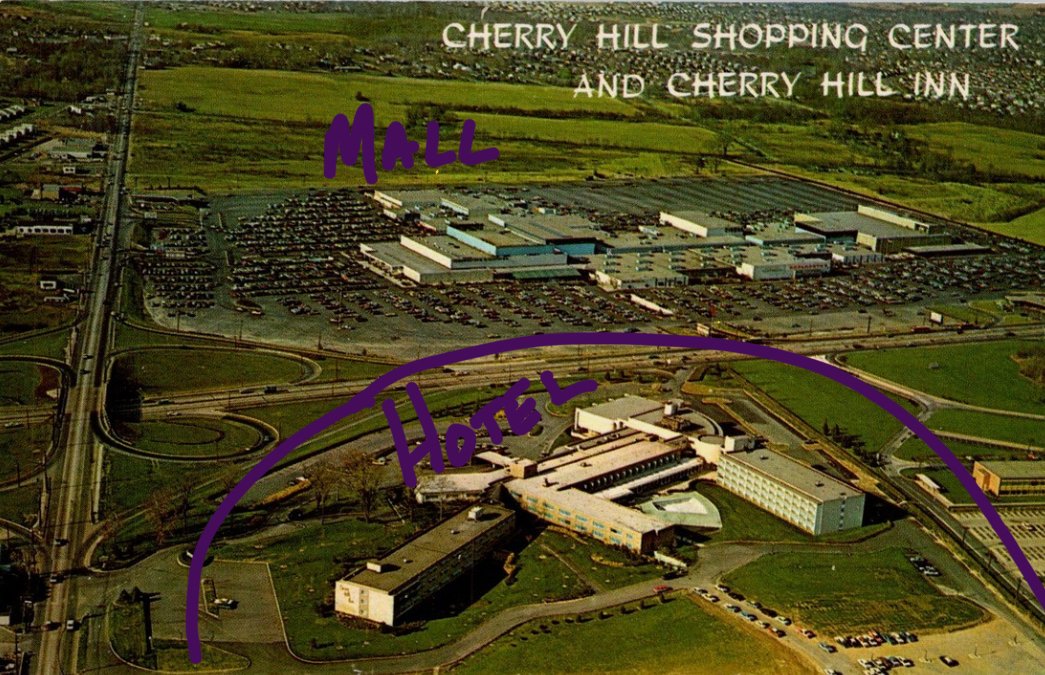
It’s not hard to see why my father saw promise in Cherry Hill, New Jersey. By the early 1970s, the area had blossomed into a model of post-war suburban ambition. Since the 1950s, it had been steadily building attractions and new housing: luxury high-rises, sprawling developments, and freshly minted communities designed for the upwardly mobile.
They Called It The Crown Jewel
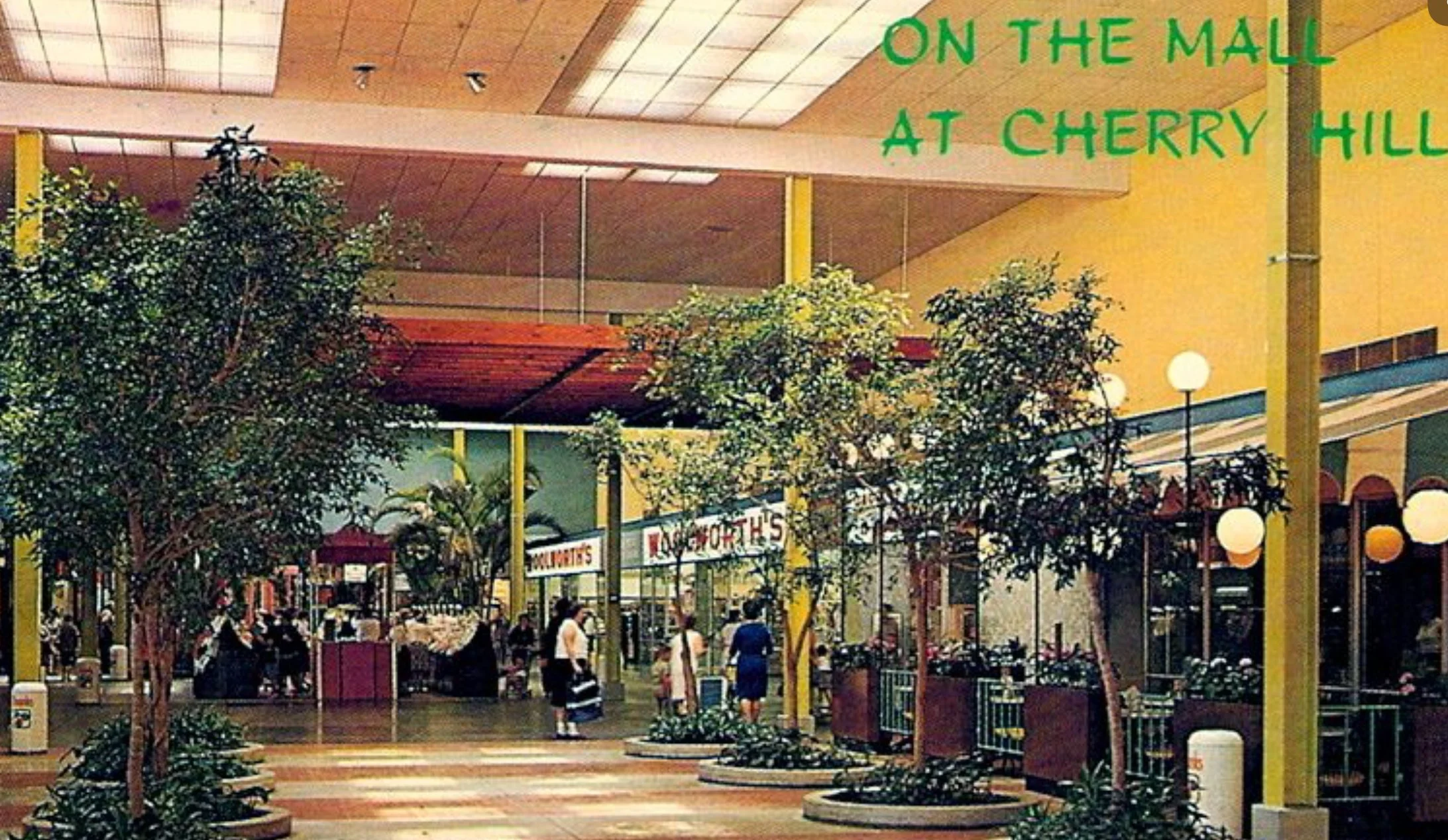
The Cherry Hill Mall, which opened on October 11, 1961, was a marvel of modern design—fifteen acres of air-conditioned retail utopia featuring underground delivery tunnels, tropical plants, fountains, “sidewalk cafés,” a cinema, and parking for over forty-five hundred cars. It wasn’t just a mall—it was a new kind of civic center, hosting concerts, children’s theater, even Easter services and junior proms.

Let’s Take a Moment to remember Woolworth’s
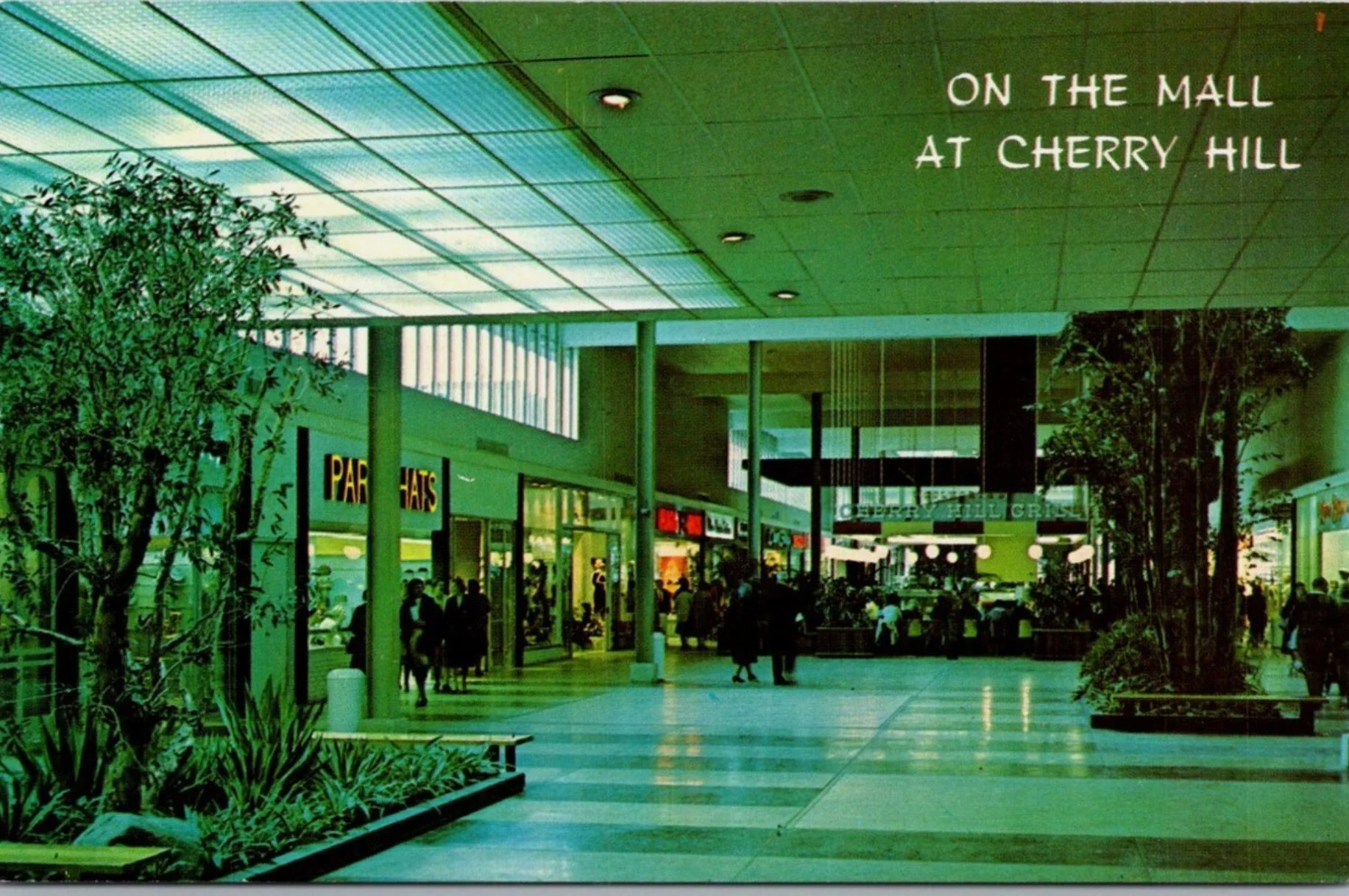
The center court of the Cherry Hill Mall as it appeared in the early 1960s. One of the first enclosed malls in the nation—and the first east of the Mississippi—it was designed by famed architect Victor Gruen and built on the former George Jaus farm across Route 38 from the Cherry Hill Inn. (Courtesy Cherry Hill Historical Commission)
A GINORMOUS Undertaking
The resume entry doesn’t come close to conveying the scale of the hotel or the responsibility resting on my father’s shoulders.
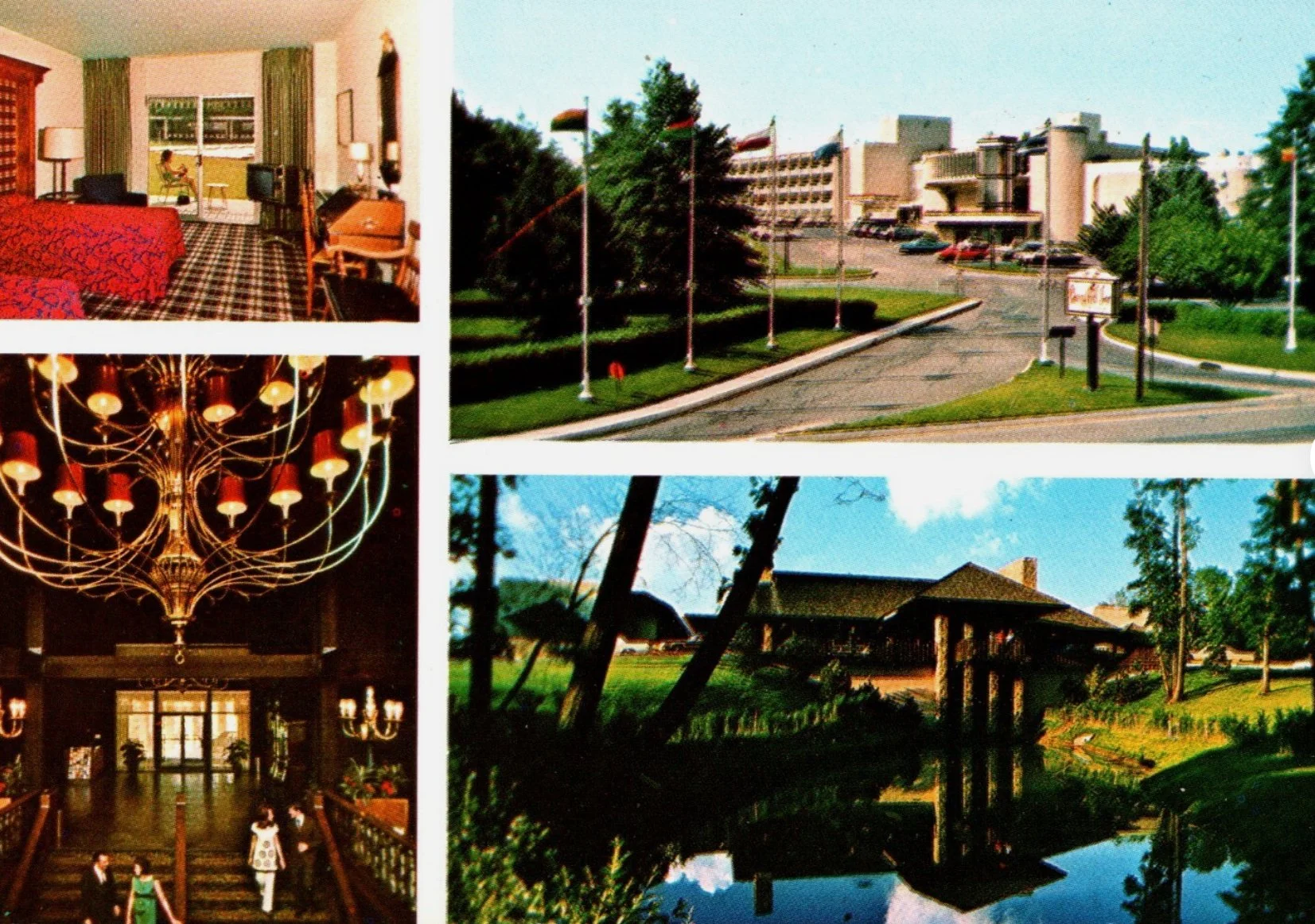
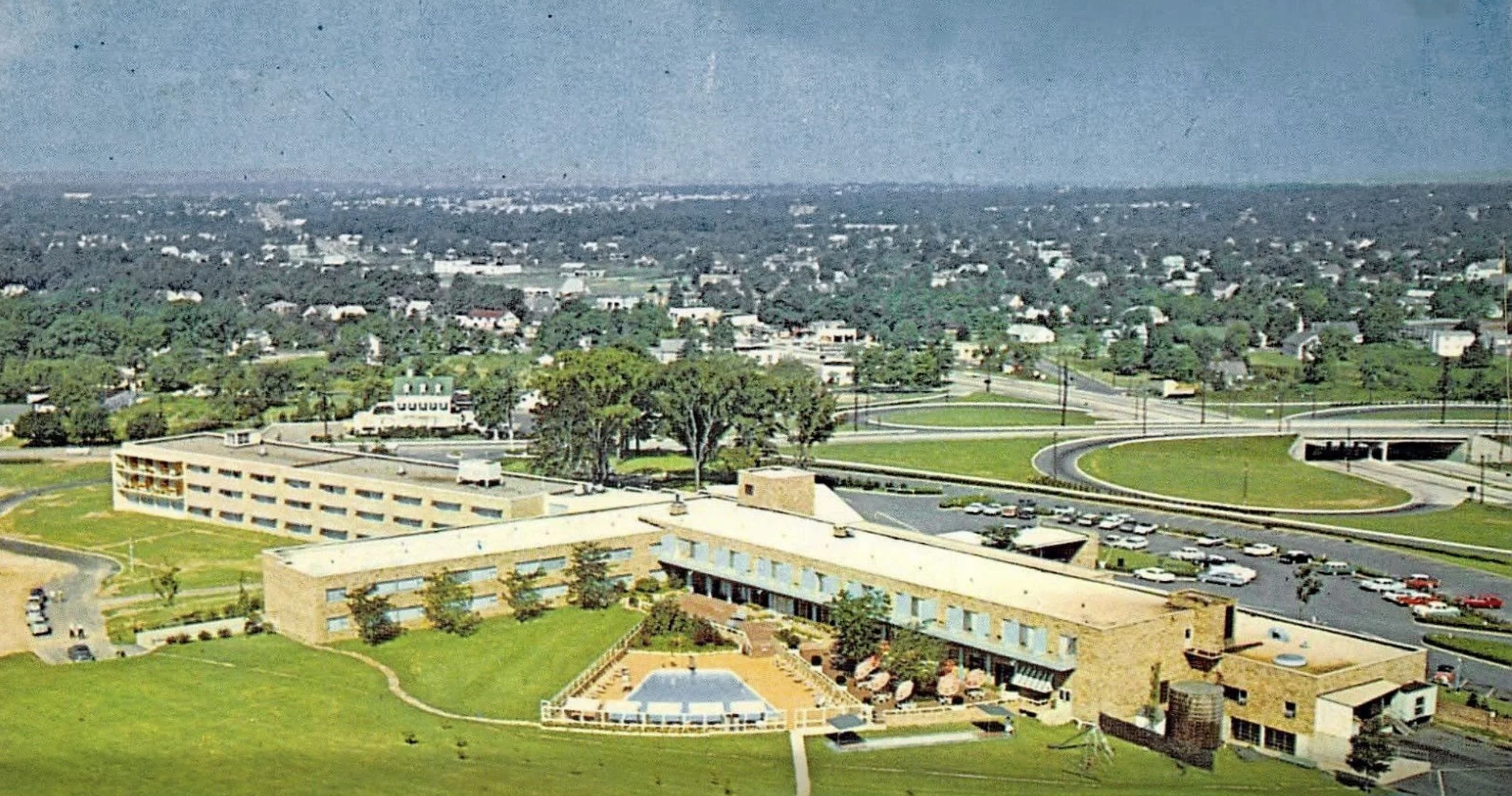
Dubbed “Cherry Hill, U.S.A.”, the development was imagined as a city within a city: the Cherry Hill Inn, the RCA building, Park City Luxury Apartments (where my father rented a unit), a shopping center, and hundreds of private homes. Developer Eugene E. Mori envisioned it as “a self-contained shopping town capable of filling all the needs of half a million people.”
Postcard Marketing
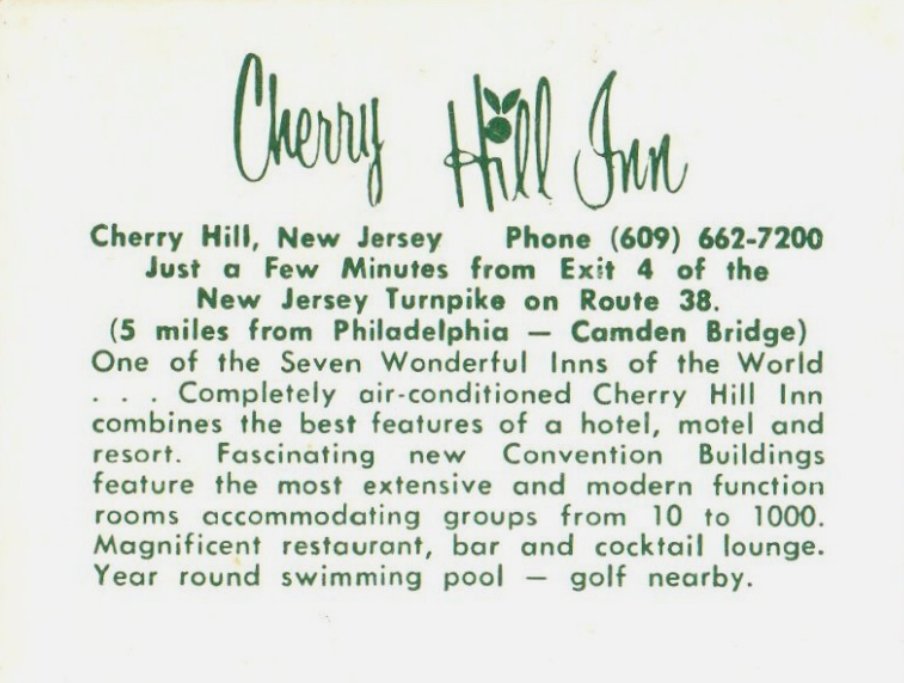
I never knew how much postcards played a part in marketing hotels until my research. Thank goodness people kept them.
Quite the Escape
Amenities at the Cherry Hill Inn, 1971
14 function rooms for meetings and banquets (capacity: 8–900)
Fine dining facilities and cocktail lounges
Live entertainment and dancing
Heated indoor pool in a tropical garden
Heated outdoor pool
Lighted tennis courts, badminton, volleyball, shuffleboard, billiards
Gift shop, newsstand, barber and beauty shops
Access to nearby golf courses
Free and valet parking
Limousine service
Heliport on premises
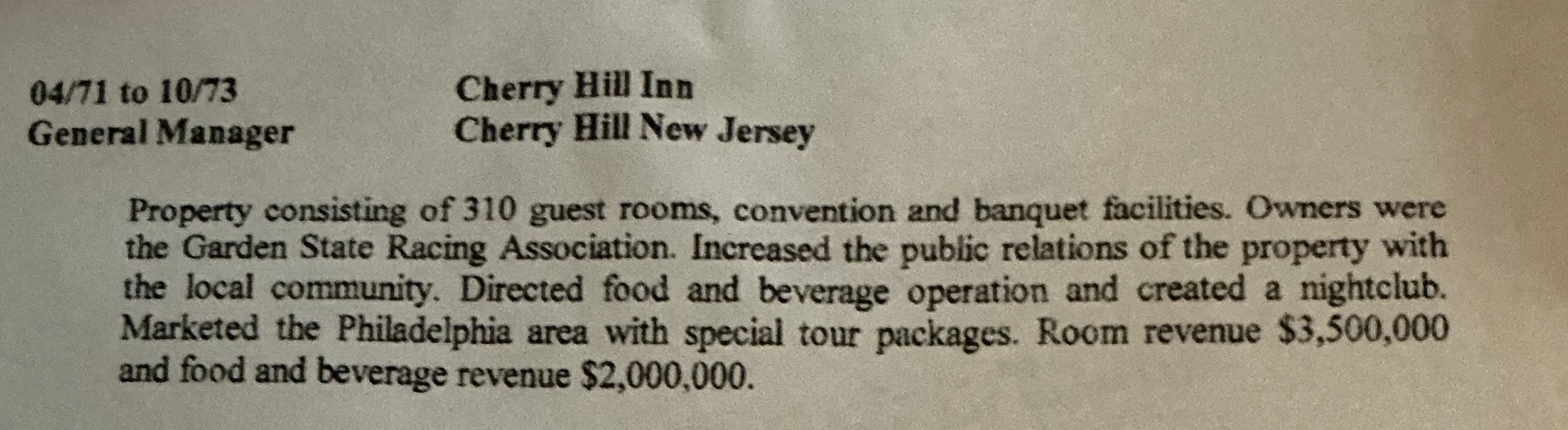
The Resume Line 04/71 – 10/73 General Manager Property consisting of 310 guest rooms, convention and banquet facilities. Owners: Garden State Racing Association. Increased public relations with the local community. Directed food and beverage operations and created a nightclub. Marketed the Philadelphia area with special tour packages. Combined room and F&B revenue: $2,000,000.
Dad’s Resume Post For Cherry Hill Inn is a Little Off
During my research, I found an older resume that does show my father hired in the position as Food and Beverage Director. I was surprised at this, but the owners may have been hedging their bets, promises of promotion may have been made, or my father just thought it was a better opportunity and a financial gain. But I always must consider a younger, rasher, Frank Rota…and he could have just had it with the Hilton.
An Interesting Crossover
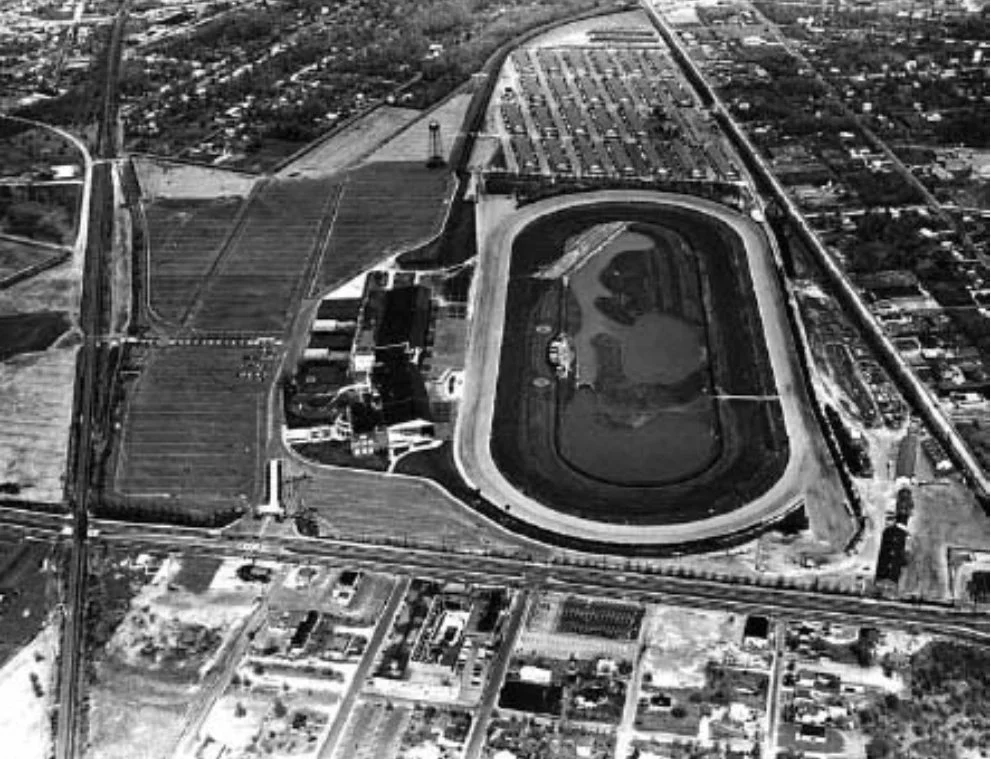
Built and managed by the Garden State Racing Association, the Cherry Hill Inn opened in 1954 and quickly became South Jersey’s social hub—a glamorous weekend escape for guests from Philadelphia and New York. It soon replaced Camden’s Walt Whitman Hotel as the region’s premier convention destination, attracting political events (including visits from Pat and Richard Nixon) and elegant social gatherings. Picture: A crowd enjoys the races at Garden State Park during its inaugural season in 1942. Nearly 440,000 people attended during the first forty-nine-day meet, betting an average of $528,217 daily. (Courtesy Cherry Hill Historical Commission)
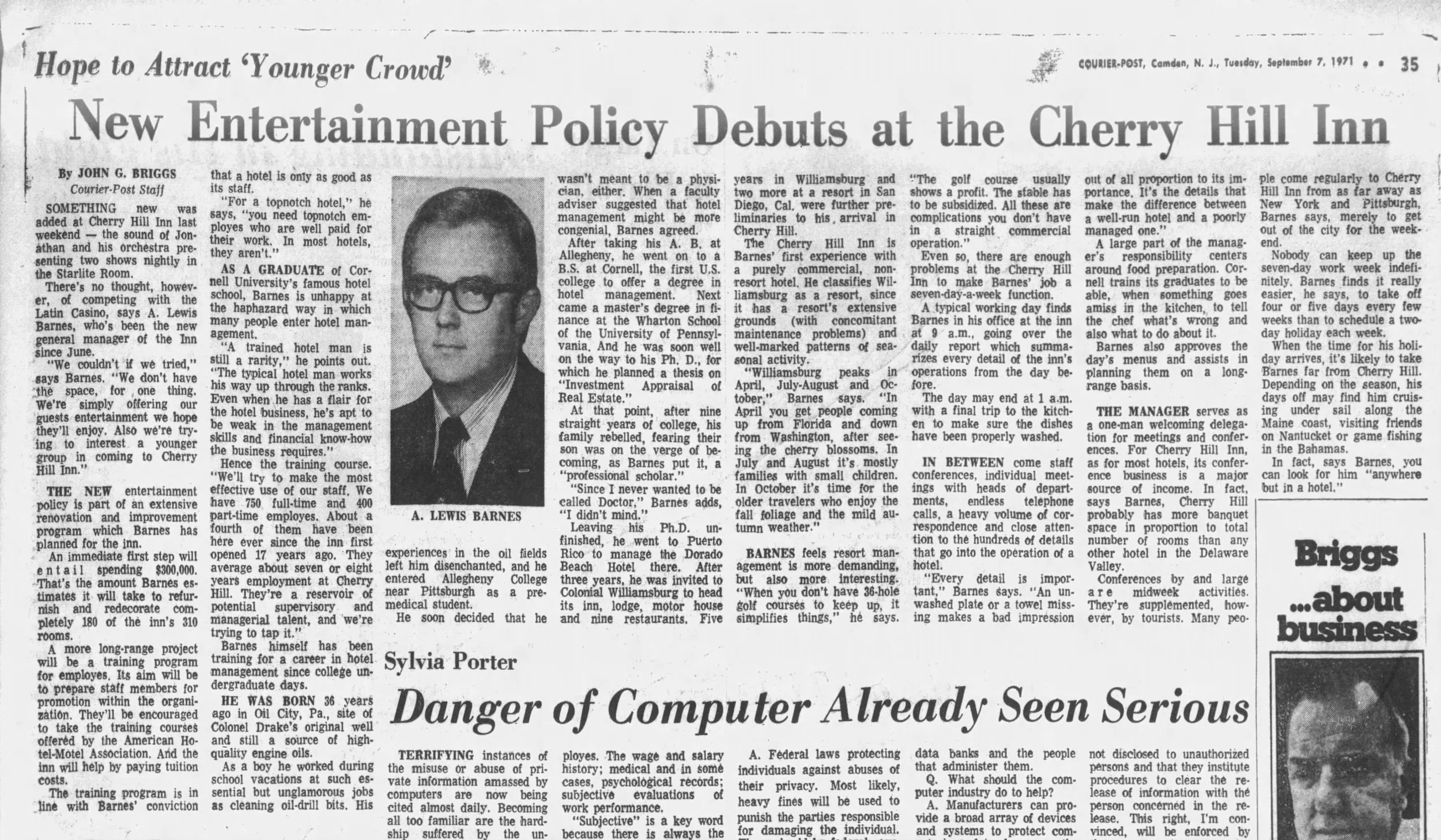
While researching, I stumbled upon an article in the Courier-Post (Camden, NJ), dated September 7, 1971: “New Entertainment Policy Debuts at the Cherry Hill Inn” by John G. Briggs. It featured an interview with A. Lewis Barnes, who had been General Manager since June 1971. The piece announced a renovation and a new nightly entertainment schedule in the Starlite Room, while highlighting a staff training initiative developed with the American Hotel and Motel Association—an admirable effort for a property employing over 1,100 people. But tucked between the lines was a quote that caught my attention…
A Daughter’s Unsubstantiated Righteous Indignation
“A trained hotel man is still a rarity,” Barnes said. “The typical hotel man works his way up through the ranks. Even when he has a flair for the business, he’s apt to be weak in management skills and financial know-how.”
As a proud graduate of Cornell’s hotel school, Mr. Barnes likely saw his words as harmless observation—but to someone like my father, who had literally worked his way up from the kitchen to the boardroom, they would have stung.
Frank Rota believed deeply that true management understanding came from firsthand experience—from knowing how every position functioned before trying to lead it. He respected formal training but prized earned wisdom more. Whether this was a clash of philosophies or a quiet professional rivalry, I’ll never know. I hope, perhaps naïvely, that Barnes later became a mentor rather than an adversary.
My father rarely spoke about his time in Cherry Hill, though when he did, his tone turned wary. He described the area as having “gotten rough”—mentioning arson and robberies. Sadly, that concern was not unfounded. In November 1972, tragedy struck the Cherry Hill Inn when a mentally disturbed man fatally stabbed a switchboard operator, Virginia Judd, during an overnight shift. The crime made regional headlines—a senseless, shocking act in an otherwise polished world.
The death of a hotel employee, no matter how long they had been employed, or what department/role they worked, is felt by everyone, on every shift. It takes a strong leader to give teams the time to discuss what happened openly, and to reestablish a sense of security.
There was a bit of salacious reporting of the incident, including an out of line (in my opinion), security guard and the company that employed him. They felt that hotel guards should be armed, and made the bold claim that if he had a gun he could have saved Mrs. Judd.
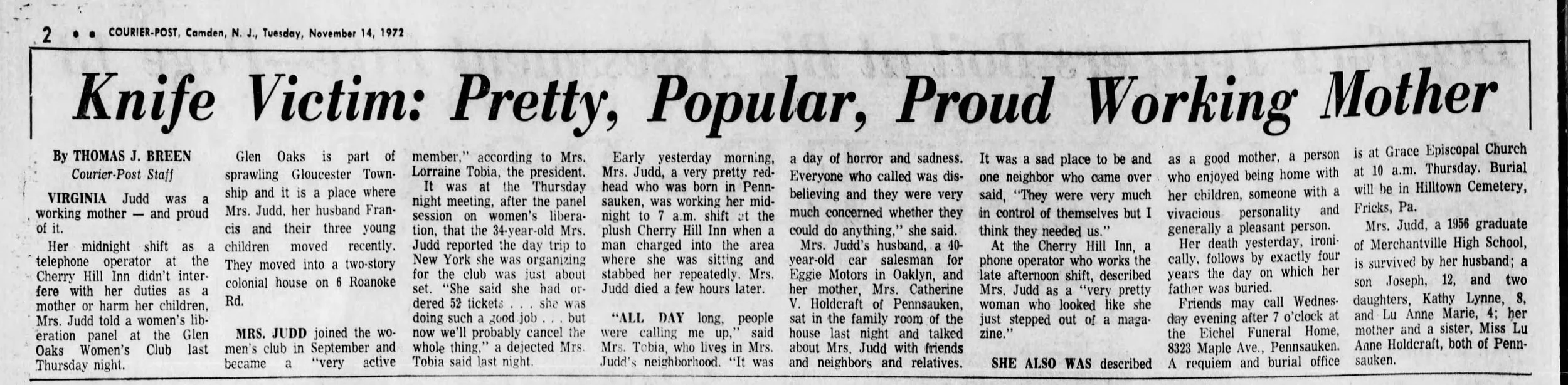
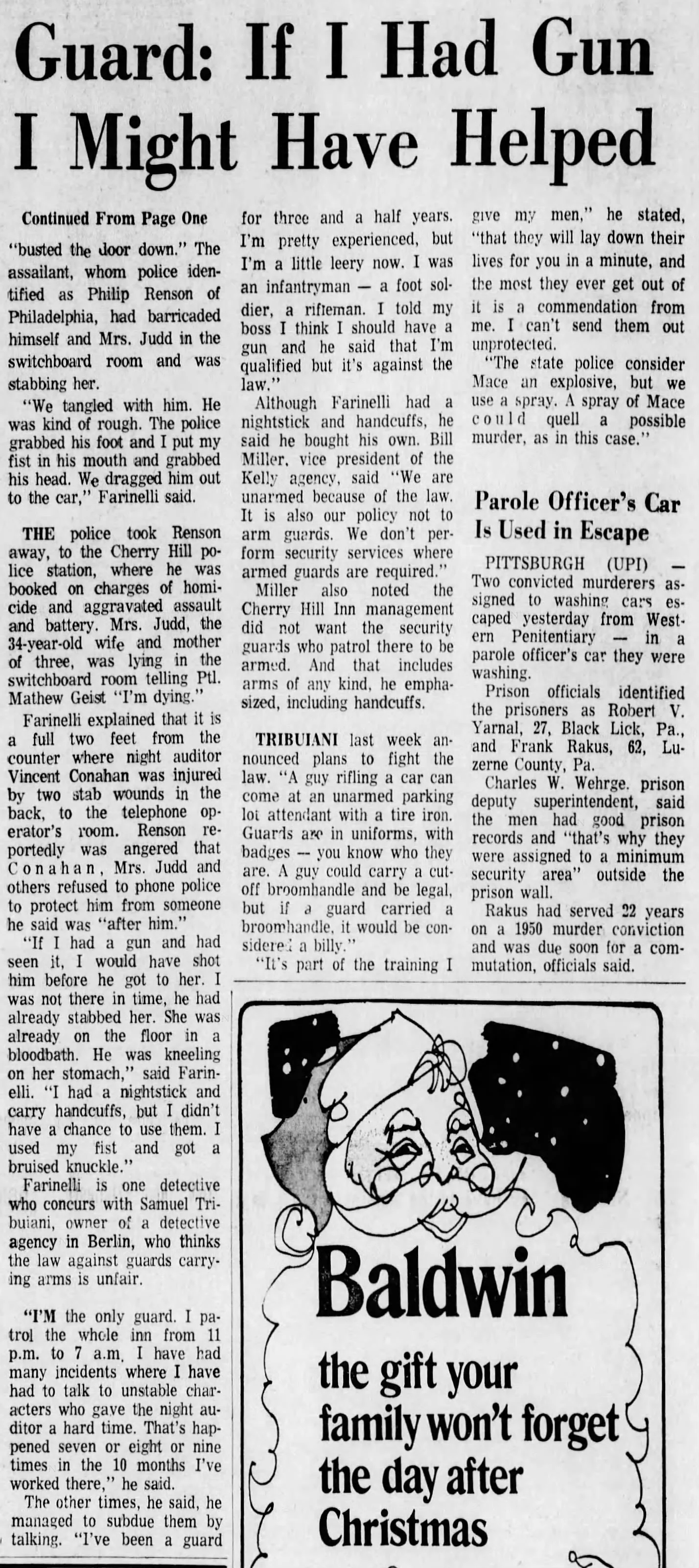
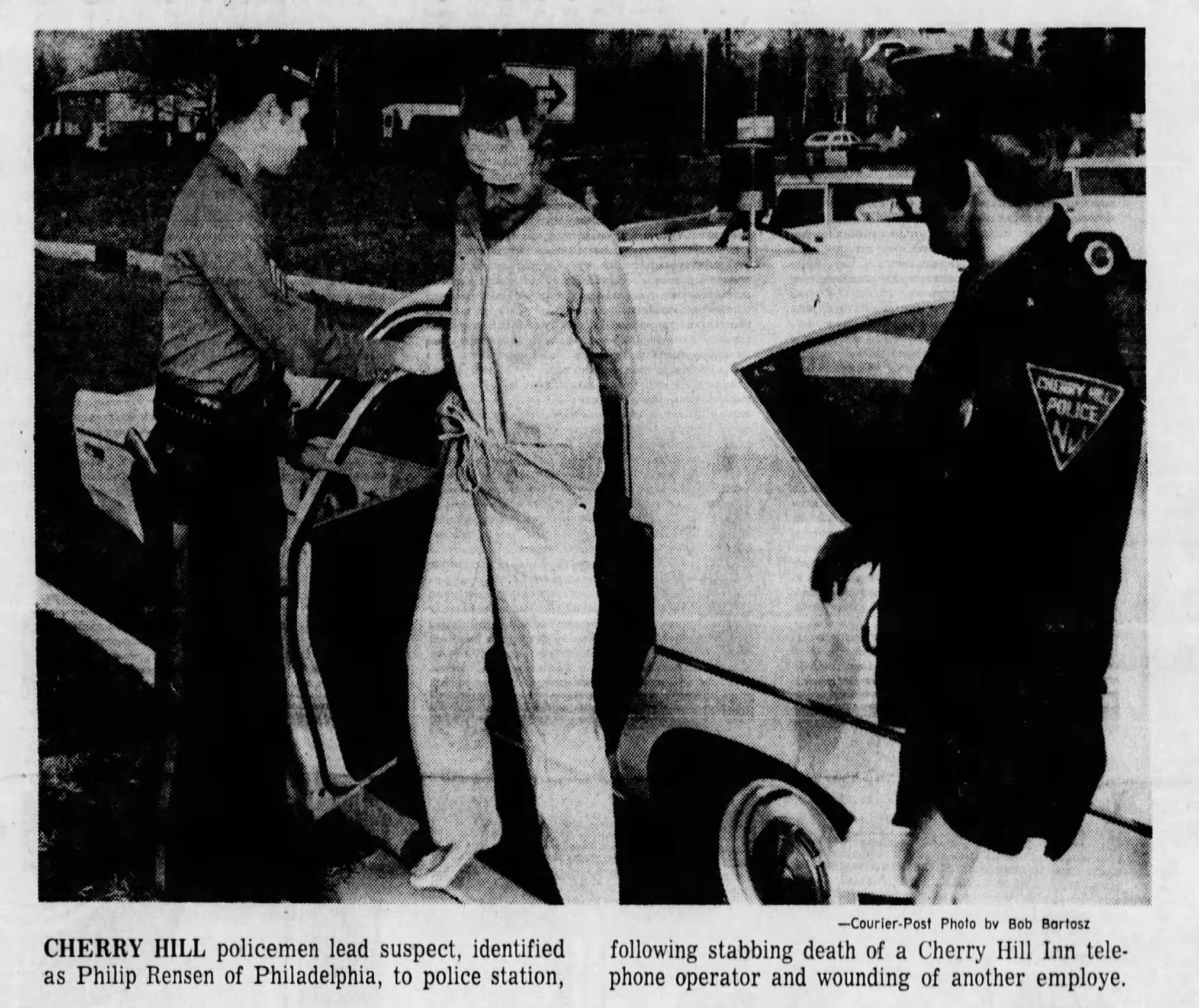
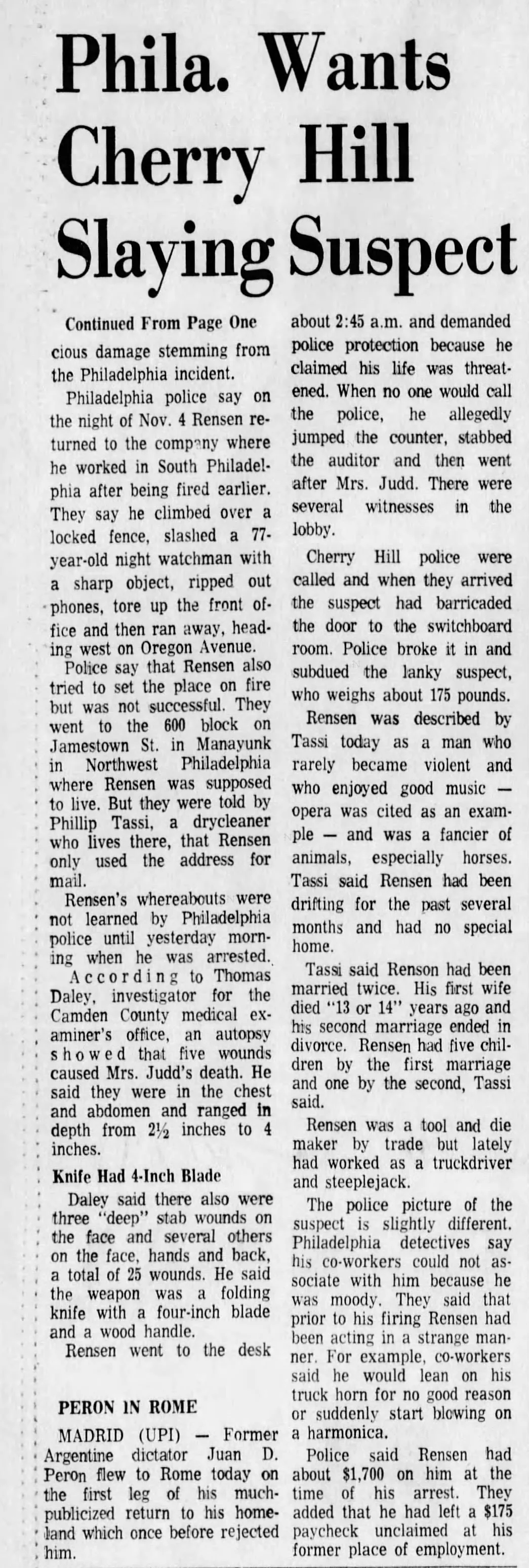

Something had to break because, roughly one month later, Frank Adam Rota was promoted to the position he would hold at every hotel moving forward - General Manager.
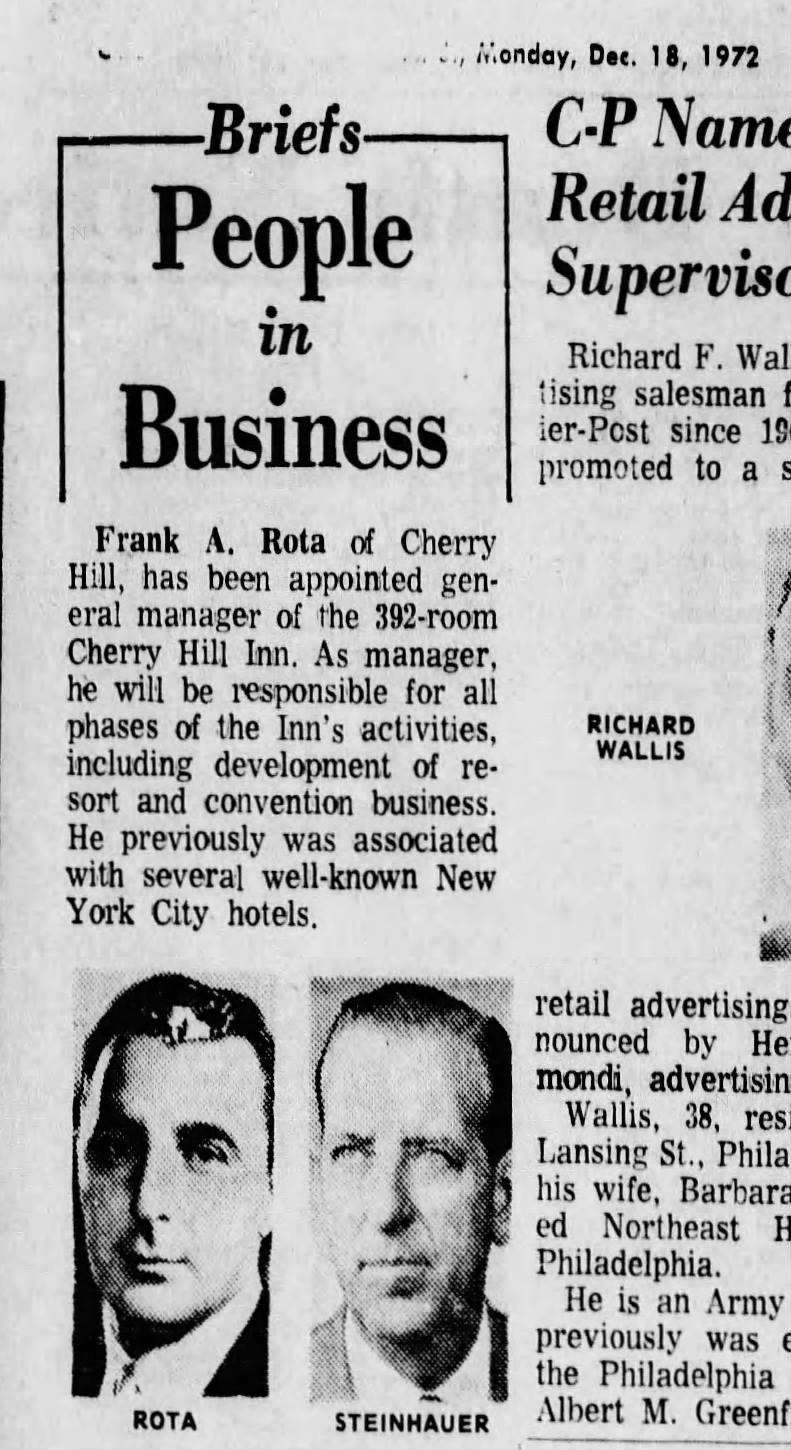
It’s all in the eyes…
Two Very Different Impressions
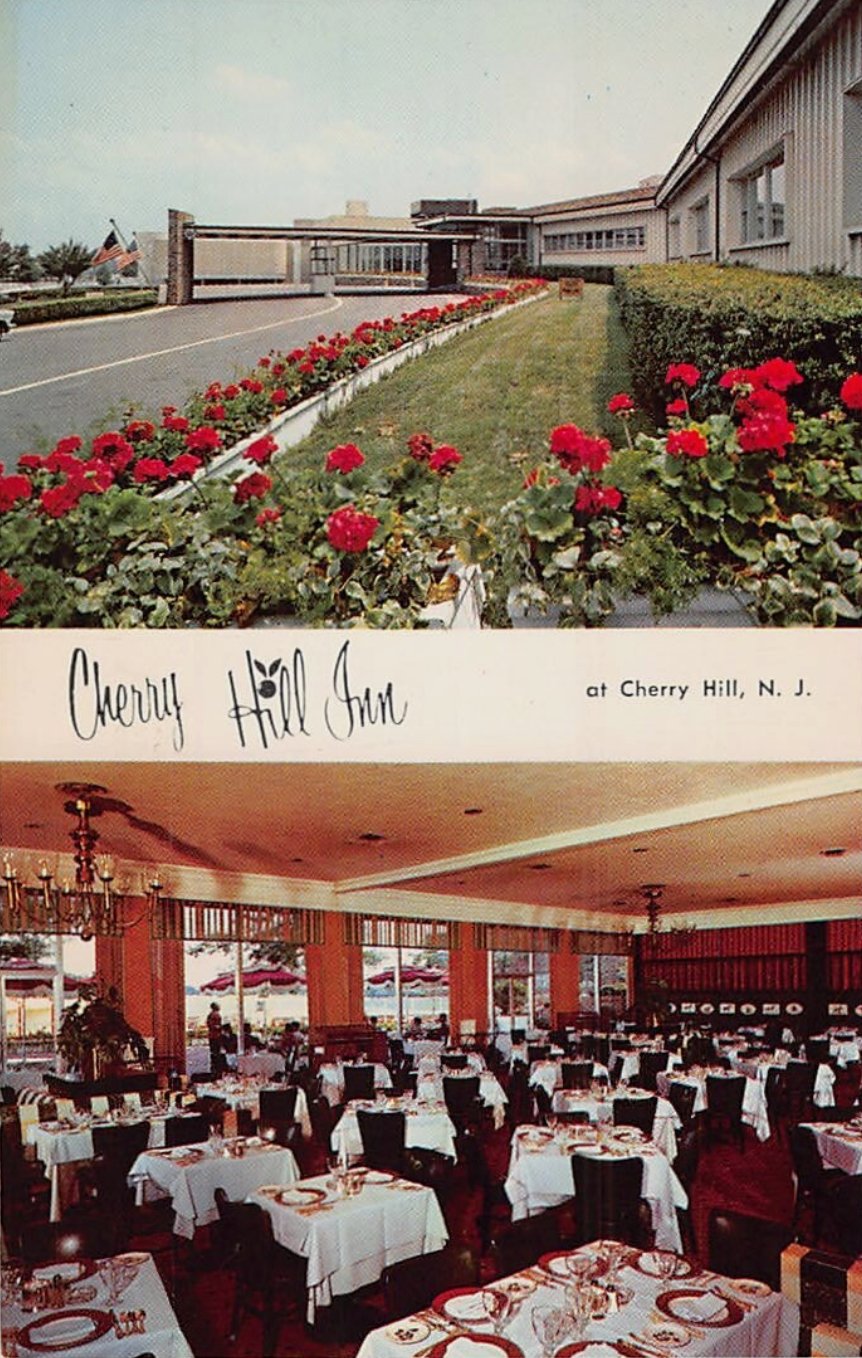
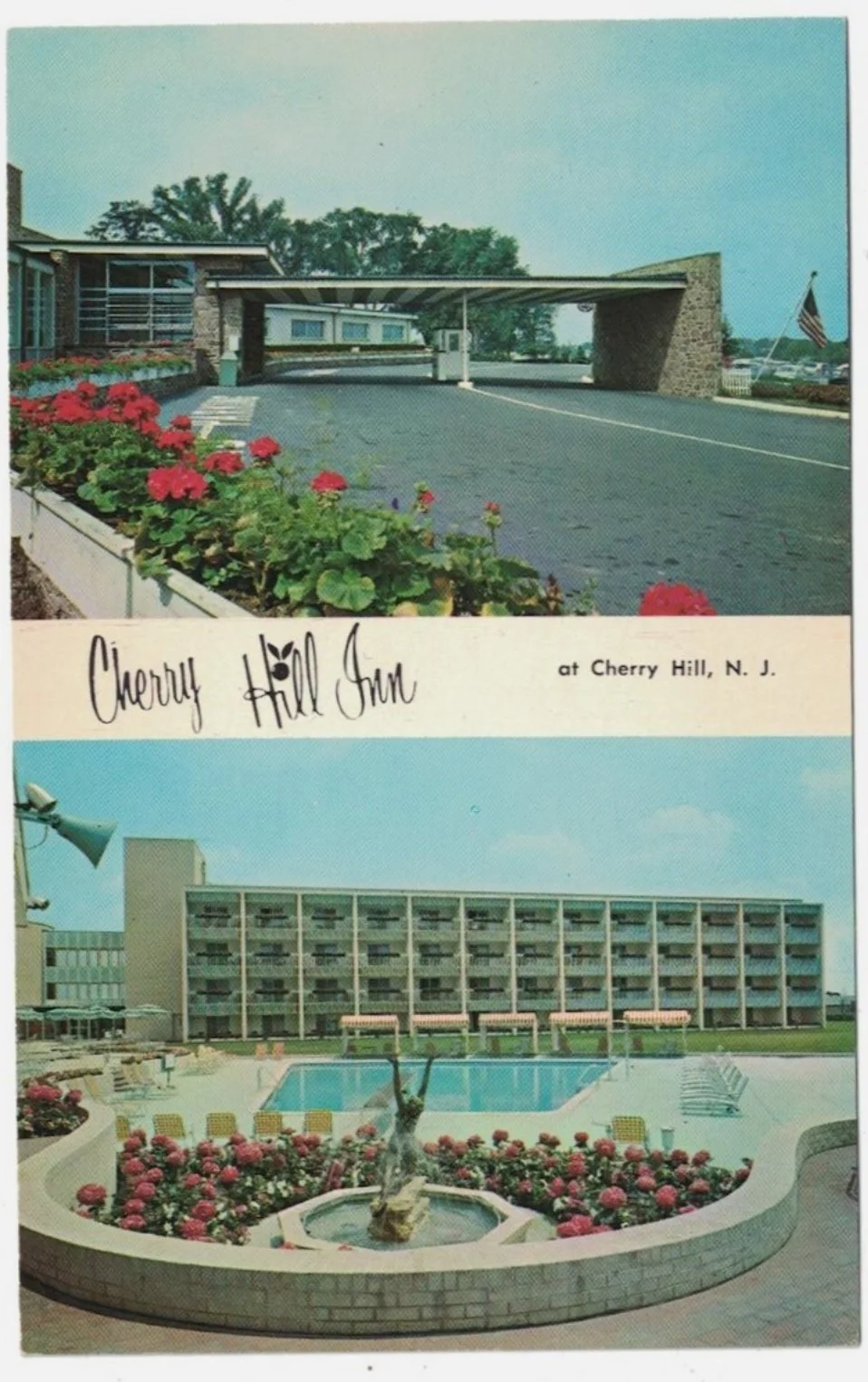
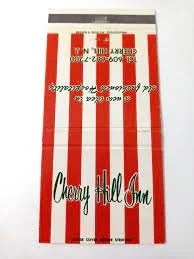

My memories of the Inn are limited but vivid. Brief visits for special occasions when my grandmother and I were treated like royalty. It was the first time I understood that my father wasn’t just “Dad”; he was someone important to the people around him. The ballrooms glittered, the staff greeted him with genuine admiration, and on my fifth birthday, the engineering department presented me with a “princess chair” to use whenever we dined in the restaurant. (He later told me that so many guests requested one just like it that they built five more—and rented them out for a tidy profit.) That blend of practicality and showmanship…of pride, polish, and humor was the essence of Frank A. Rota. And for a brief, shining moment, Cherry Hill was his kingdom.
Within six months, my Dad had left the hotel, the industry, and the state. Luckily, there is no need to guess as to how the owners felt about his leadership. I think Mr. Mori was a bit shell-shocked by my Father’s departure.

Several years after leaving The Cherry Hill Inn, Mr. Cresci provided Dad a reference letter…it does seem like the Inn was a hot mess during his time there, but that’s usually what he thrived in fixing.
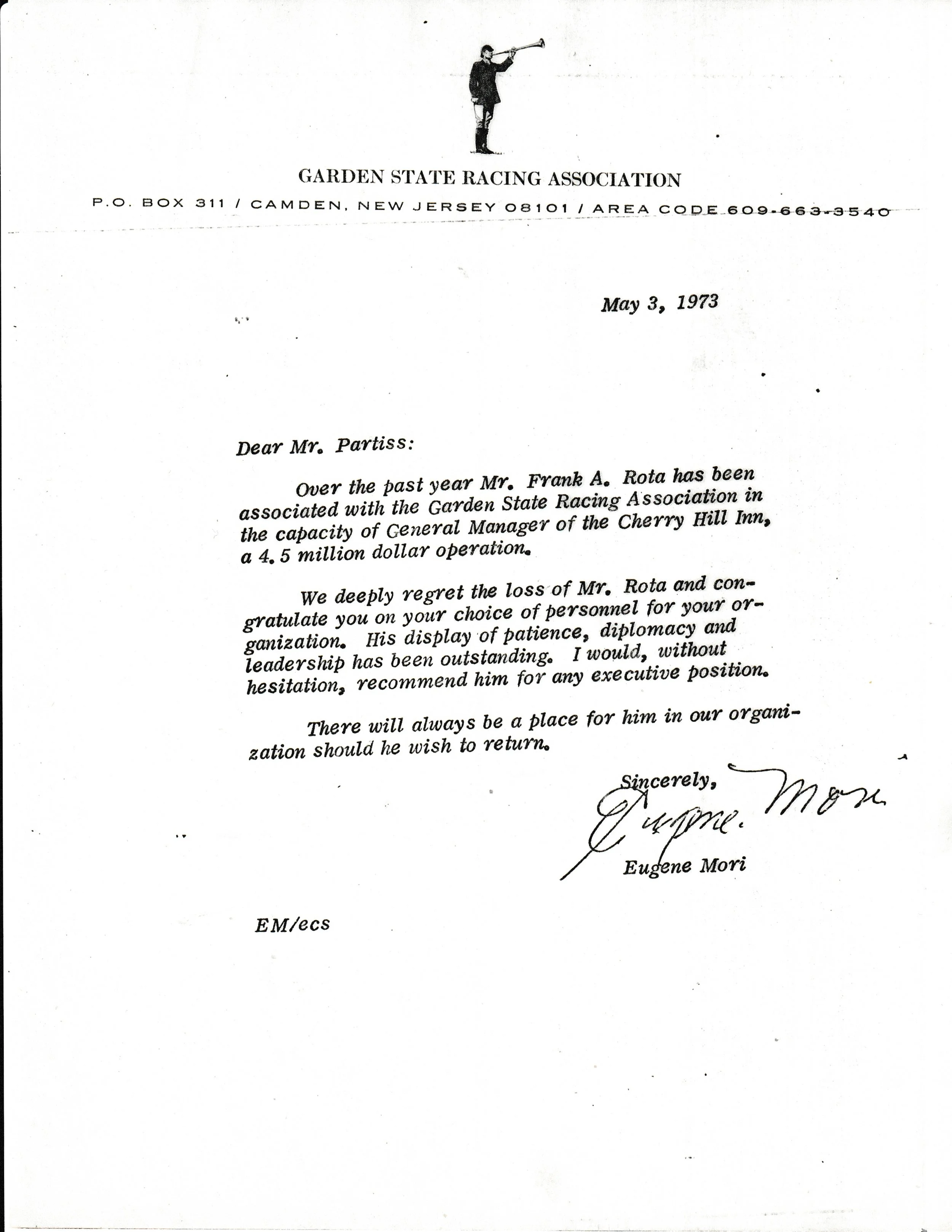
Mr. Mori’s letter to my Father’s new employer…was that a thing?
It has always been my contention that something happened that forced my father to make a rash decision to get out of Dodge…well, Cherry Hill. For the longest time I secretly thought we had been placed in Witness Protection…
As always, thanks for stopping by. Please don’t hesitate to reach out!